Klaviyo Pricing
Klaviyo pricing can feel confusing at first glance. Many founders see the bill rise each month and assume the platform is just expensive.
And in a sense – they’re right.
But when managed properly, it becomes one of the most profitable investments in your eCommerce tech stack. The key is understanding what you’re actually paying for, and how to keep that spend efficient.
How Klaviyo Pricing Works
You don’t pay for “campaigns” or “flows.”
You pay for profiles—and every email address or phone number in your account counts as one.
If someone subscribes to both your email and SMS list, Klaviyo merges those two into a single profile.
Pricing scales based on:
1. The number of profiles in your account.
2. The number of email sends allowed per profile.
Each pricing tier includes a set number of sends and contacts.
For example:
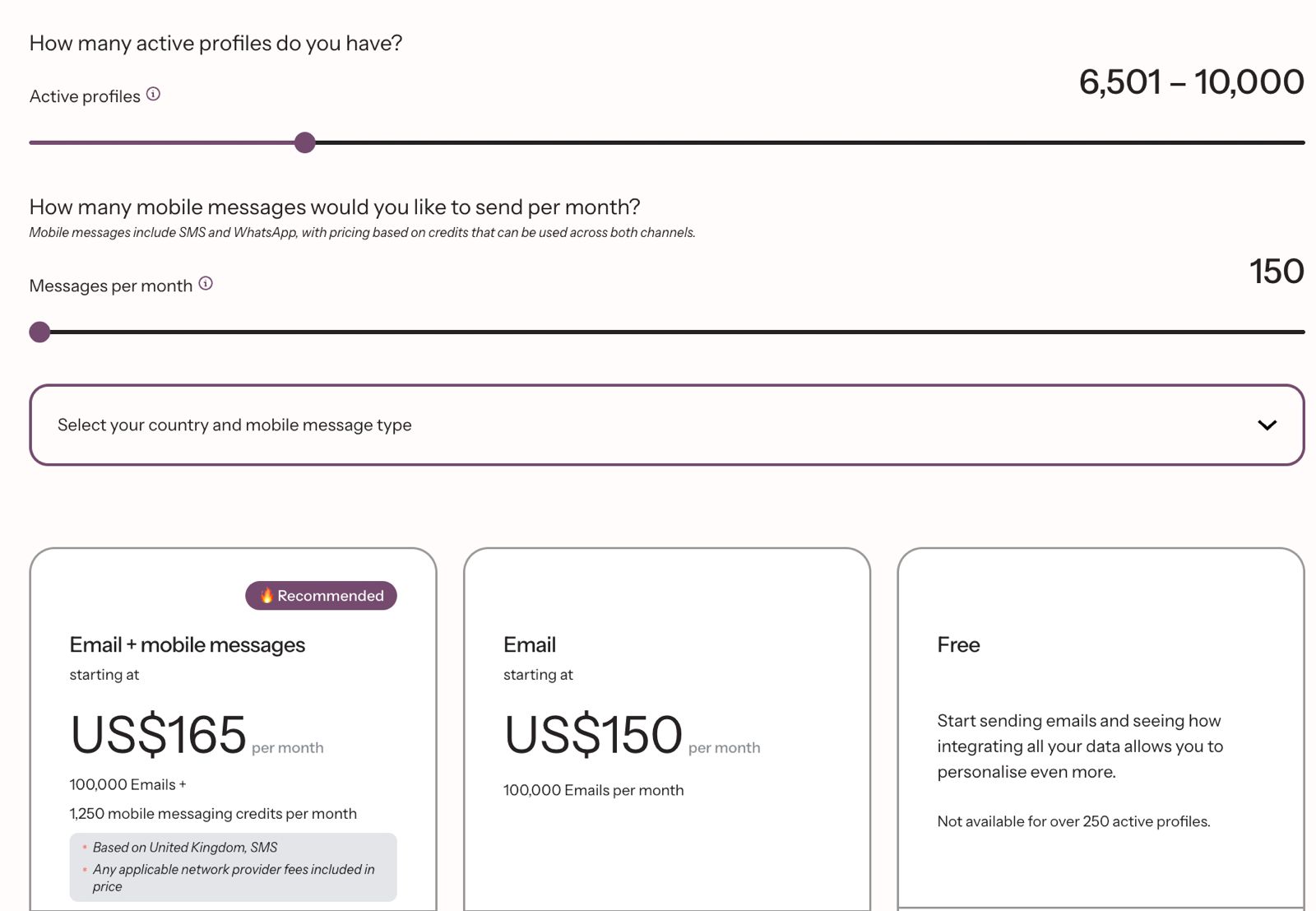
- A list of 9,359 contacts falls into the 10,000-profile bracket.
- That tier typically includes around 100,000 monthly sends.
Once you cross the next threshold (e.g. 12,000 profiles), you automatically move to the next tier. That’s where list mismanagement can suddenly become a large, unnecessary cost.
If you want to check out exactly how much you’d pay Klaviyo for your brand, go to this page on Klaviyo’s website.
When Does Someone Become a Billable Profile?
This is where most brands get caught out.
Klaviyo charges you for every profile, even if they’ve never opened an email.
There are two key types of consent:
Explicit consent — when a customer signs up to receive marketing emails (e.g. via popup or checkout).
Implicit consent — when a customer gives their email during checkout or customer service but doesn’t explicitly opt in.
Both create billable profiles in Klaviyo.
Even if someone never subscribed, they still count toward your total — and can often be contacted for transactional messages.
Understanding this distinction helps you keep your profile count accurate and avoid silent bloat over time.
Why Managing Your Profile List is Crucial
Most founders assume more subscribers = better results.
But in Klaviyo, a bigger list often means a bigger bill and worse deliverability if not maintained properly.
Over time, you might be paying thousands of dollars a month for people who haven’t opened an email in a year.
How to Reduce Your Klaviyo Bill Without Losing Reach
The fix is simple — but it requires consistency.
Clean your list monthly.
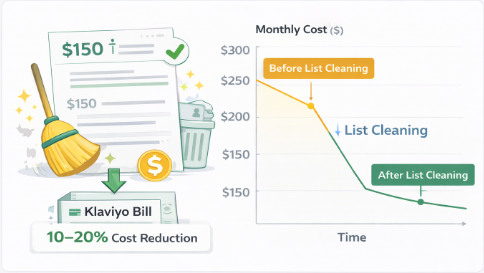
Put anyone who hasn’t opened an email in the past 90 days through a sunset flow, if they don’t engage, remove them.
This improves deliverability and keeps your costs lean.
These steps alone can reduce your Klaviyo bill by 10-20% while improving performance across every metric.
When Klaviyo Is Worth the Cost
Many founders look at Klaviyo’s pricing and wonder if it’s worth it.
What most don’t realize is that Klaviyo isn’t just an email tool — it’s a data aggregator.
It pulls in customer behavior from every touchpoint — website, checkout, and post-purchase — giving you the power to build custom flows, advanced segmentation, and personalized automations that drive real revenue.
The platform is absolutely worth the price tag — but only if someone on your team knows how to use those features to their full potential. Otherwise, you’re paying for horsepower you never turn on.
Key Takeaways to understand Klaviyo Pricing
- You’re billed for profiles, not campaigns.
- Explicit and implicit contacts both count toward your total.
- Clean your list regularly to avoid paying for dead profiles.
- Always segment with a “must be subscribed” filter.
- A well-managed account outperforms any cheaper alternative.