Every eCommerce founder has seen it happen—hundreds of clicks, full carts, but no checkouts. The interest is there, the product is right, but something’s missing: motivation to act now.
That’s where urgency and scarcity come in. When used correctly, they can double or even triple your conversion rates—without resorting to discounts or aggressive sales tactics.
They work because they create tension, that gentle psychological nudge that turns “I’ll think about it” into “I need to get it now.
Humans are loss-averse. We feel the pain of missing out twice as strongly as the pleasure of gaining something new. Psychologists call this loss aversion, and it’s one of the most reliable behavioral triggers in marketing.
Here’s how urgency and scarcity tap into it:
Both activate the fear of missing out (FOMO)—a primal driver that fuels faster decisions. In fact, a study by the University of Nebraska found that time-limited offers can boost conversions by up to 332% when paired with visible deadlines or stock counters.
Urgency helps you create momentum. It gives customers a reason to prioritize you today instead of next week.
Tie deadlines to real events—like the end of a season, holiday shipping cutoffs, or product restocks. Real deadlines build credibility and trust.
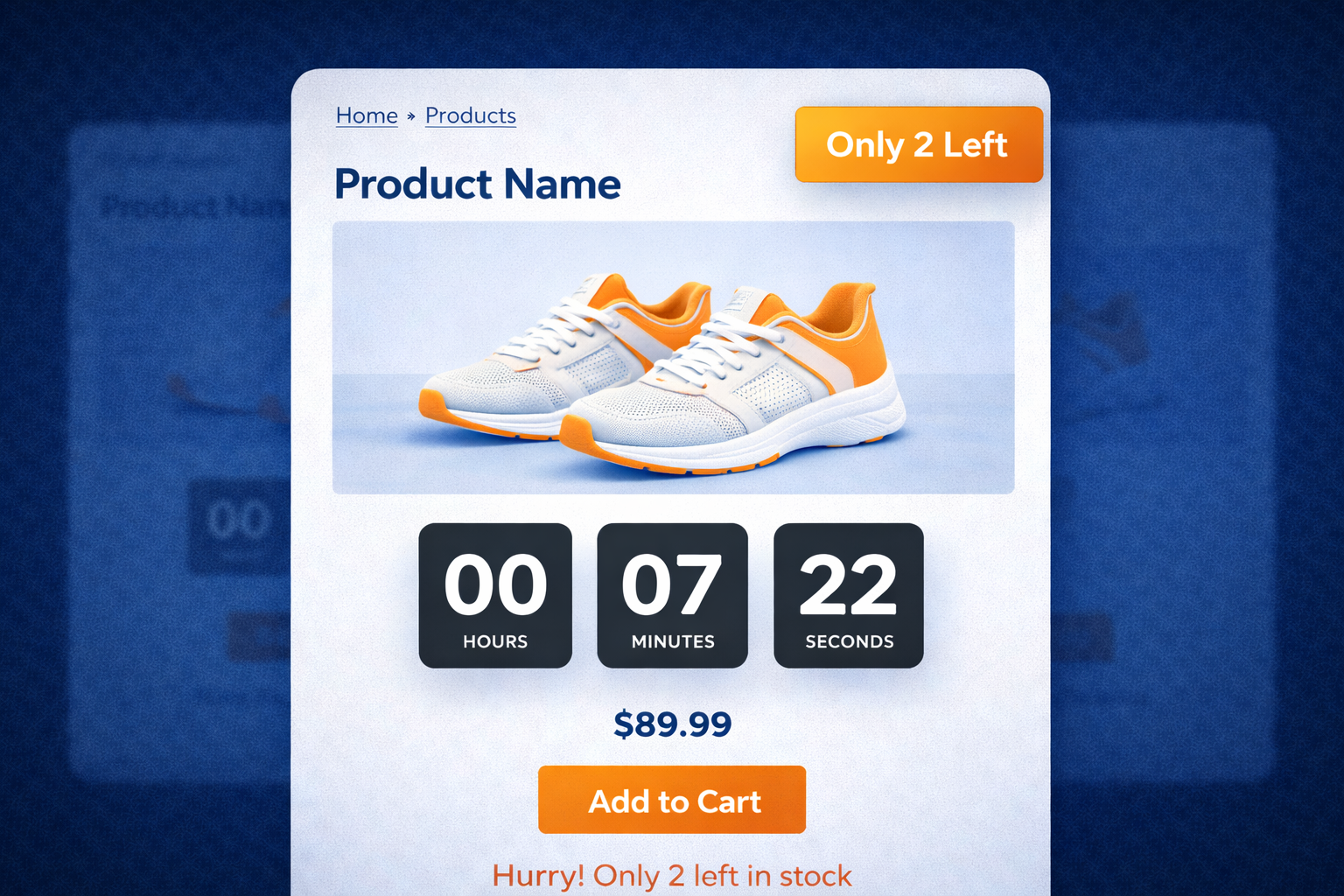
A visible countdown timer in your email or on your product page can increase conversions by up to 9%, according to a ConversionXL study. It’s a small detail with a big psychological effect.
Don’t rely on one message. Plan a short campaign sequence:
Each reminder builds tension, reactivating interest and gently guiding the customer to act before time runs out.
Scarcity is about perceived demand—making customers feel your products are valuable because they’re limited.
If you sell physical products, communicate availability honestly:
For info or digital products, simulate scarcity by limiting bonuses or access:
This type of framing makes your offer feel special, not cheap.
Scarcity alone creates desire. Social proof makes it believable.
Combine statements like “Only 12 left” with “Over 500 already sold” to validate demand and build trust.
Use progress bars, low-stock indicators, or crossed-out inventory counts. When people see others taking action, they instinctively follow suit.
These principles work best when used sparingly and honestly. Overuse can destroy trust.
Treat these triggers like spice in a recipe—just enough to enhance flavor, never to mask the quality of your offer.
The best-performing campaigns blend both principles seamlessly:
This sequence builds pressure gradually while maintaining credibility and excitement.
✅ Urgency drives fast action through time limits and countdowns.
✅ Scarcity increases perceived value by showing limited quantity or access.
✅ Both together build momentum and credibility when used authentically.
✅ Avoid overuse—trust compounds when urgency feels real.
✅ Track results—measure conversion lift after each campaign and refine over time.
At Shawfire Media, we help eCommerce brands use psychology the right way—combining urgency, scarcity, and customer behavior data into systems that grow revenue without sacrificing trust.
If you want to learn how to structure your next email campaign around these triggers, join our mailing list for more psychology based ideas.
Work with experts who drive engagement, retention, and revenue.